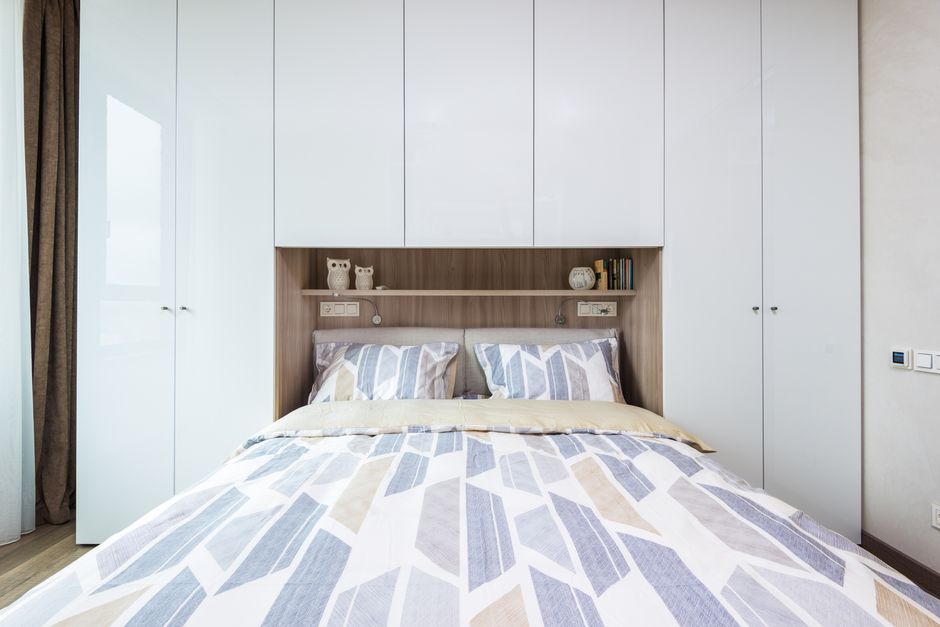
Choosing the right storage solution for a Sydney bedroom involves weighing up cost, available floor space, and how long you plan to stay in the home, and this guide walks through every key consideration, from fit-out options to materials built for the long haul.
Custom Wardrobes vs Freestanding: Which Really Suits a Small Sydney Bedroom?
When floor space is tight, the decision between custom wardrobes and freestanding units is rarely straightforward. Sydney apartments and terrace houses often feature awkward alcoves, angled ceilings, or rooms where every centimetre counts. A wardrobe that fits the exact dimensions of your wall can reclaim space that a standard flat-pack unit simply cannot reach.
Where Freestanding Falls Short in Compact Rooms
Freestanding wardrobes are portable and generally cheaper upfront, which appeals to renters or buyers who may move within a few years. The trade-off is that standard sizes, typically 600 mm deep, rarely align with your wall width, leaving dead corners and visual bulk that make a small bedroom feel even more cramped. In a room under 10 square metres, that wasted gap becomes genuinely frustrating.
Why Custom Wardrobes Win on Space Planning
Built-in or fully custom wardrobes are designed around your room's actual measurements, so the storage runs wall to wall and floor to ceiling. This maximises vertical space that freestanding units ignore, and the flush finish creates a cleaner, more open feel, something Sydney buyers consistently reward at auction. Custom solutions also allow you to dictate the internal configuration from day one, choosing exactly where hanging rails, shelves, and drawers sit rather than compromising with a fixed layout.
- Space efficiency: Built-ins use every centimetre, including awkward alcoves
- Visual calm: Flush doors reduce visual clutter in tight rooms
- Resale value: Quality built-ins are viewed as a permanent fixture and often add perceived value
- Flexibility: Freestanding suits renters who need to take storage with them
For most owner-occupiers in Sydney's compact housing stock, custom wardrobes offer a measurably better return on the available square footage.
What Do Custom Wardrobes Cost in Sydney?
If you're weighing up custom wardrobes against a flat-pack alternative, price is usually the first sticking point. In Sydney, costs vary considerably depending on size, materials, internal configuration and whether you choose a built-in or freestanding solution, but having a realistic baseline helps you plan without surprises.
Typical Price Ranges to Expect
As a general guide, Sydney homeowners can expect to pay:
- Entry-level built-ins: $1,500–$3,000 for a single-bay wardrobe with basic shelving and a melamine finish
- Mid-range custom fit-out: $3,000–$6,000 for a full wall of storage with mixed hanging, drawers and shelf configurations
- Premium installations: $6,000–$15,000+ for walk-in robes, soft-close hardware, integrated lighting and timber or lacquered finishes
These figures typically include design, supply and installation. Supply-only quotes will be lower, but factor in a tradesperson's labour, usually $80–$150 per hour in Sydney, before assuming you're saving money.
What Drives the Price Up?
Several choices push costs toward the higher end of the scale:
- Internal complexity: pull-out shoe racks, velvet-lined jewellery drawers and built-in LED strips all add to the bill
- Material selection: solid timber and high-gloss lacquer cost significantly more than standard melamine board
- Door style: frameless sliding doors or hinged panel doors with soft-close mechanisms carry a premium over simple curtain or open-front designs
- Difficult room geometry: sloped ceilings, alcoves and non-standard wall angles common in older Sydney homes require more custom cutting and fitting time
Getting two or three written quotes from Sydney-based installers, and comparing what each one actually includes, remains the most reliable way to land on a fair price for your specific space.
Space Planning Rules Every Small Bedroom Owner Should Know Before Choosing Custom Wardrobes
Before you commit to a single shelf or hanging rail, understanding a few fundamental space planning principles can save you thousands of dollars and months of frustration. Custom wardrobes give you the freedom to design around your room's exact dimensions, but that freedom is only valuable when you know the rules that govern how a small bedroom actually functions.
The 70/30 Wardrobe Rule Explained
One of the most searched questions in wardrobe planning is: what is the 70/30 rule? Simply put, aim to dedicate roughly 70 percent of your wardrobe's internal space to hanging garments and 30 percent to folded items, drawers and accessories. In a compact Sydney bedroom, this balance stops you over-engineering drawer stacks at the expense of the hanging length you actually need day to day.
Minimum Clearance Distances Worth Memorising
- Door swing clearance: Allow at least 600 mm in front of any hinged wardrobe door so the room doesn't feel immediately blocked.
- Bed-to-wardrobe gap: A walkway of 900 mm is the Australian standard minimum; 750 mm is workable in genuinely tight spaces.
- Wardrobe depth: 580–600 mm accommodates standard coat hangers without doors jamming on protruding shoulders.
- Ceiling height use: Take storage to the ceiling and add a pull-down rail if the top shelf exceeds 2 m, wasted vertical space is wasted money.
Sliding or bi-fold doors are almost always the smarter choice in rooms under 10 square metres, immediately recovering the swing clearance you'd otherwise sacrifice. Much like the practical guidance you'll find across the articles library here, the details you research before commissioning a job tend to determine the outcome far more than the decisions you make on installation day. When space is your scarcest resource, planning it precisely, not approximately, is the difference between a bedroom that breathes and one that merely stores.
Internal Fit-Out Options That Make Every Centimetre Count in Custom Wardrobes
Choosing the right internal configuration is where a truly personalised wardrobe earns its keep. Whether you opt for built-in or freestanding, the internal fit-out determines how efficiently your storage actually works day to day, and in a compact Sydney bedroom, wasted space simply isn't an option. Specialists in tailored wardrobe design and cabinetry consistently emphasise that the interior layout matters just as much as the exterior shell.
Common Internal Fit-Out Components Worth Considering
- Double hanging rails: Stacking two shorter hanging sections for shirts, jackets and folded trousers can nearly double your hanging capacity without adding a single extra centimetre of floor space.
- Pull-out shoe racks and shoe shelves: Angled shelves or pull-out racks keep footwear visible and accessible, far more practical than stacking pairs on a flat shelf.
- Integrated drawers: Internal drawers eliminate the need for a separate chest of drawers, freeing up floor space elsewhere in the room, a significant win in bedrooms under four metres wide.
- Adjustable shelving: Fixed shelves become obsolete as your storage needs change; adjustable pin-and-shelf systems let you reconfigure without calling a tradie.
- LED strip lighting: Sensor-activated LED strips inside the wardrobe aren't a luxury: they make it genuinely easier to locate items in deep cavities and reduce the need for a bedside lamp during early mornings.
- Valet rods and hooks: Slim pull-out valet rods are ideal for laying out tomorrow's outfit without cluttering the bed or floor.
A practical rule of thumb often cited by Australian wardrobe designers is the 70/30 principle, allocating roughly 70 per cent of the interior to hanging space and 30 per cent to shelving and drawers. Adjust that ratio based on your actual wardrobe habits rather than treating it as gospel.
Materials and Finishes Built to Last the Sydney Climate: The Final Word on Custom Wardrobes
Choosing the right materials is where a well-planned custom wardrobe either earns its keep for decades or starts disappointing within a few years. Sydney's climate (humid coastal summers, UV-intense sunshine and the occasional damp winter) puts cabinetry under real stress, so material selection deserves as much attention as layout or lighting.
What Holds Up Best in Sydney Homes
- Moisture-resistant MDF (MR MDF): the workhorse of quality built-in wardrobes. It resists the swelling that standard MDF suffers in humid conditions, takes paint beautifully and is far more stable than particle board near coastal suburbs.
- Melamine-faced board: tough, scratch-resistant and available in hundreds of finishes. A solid choice for internal shelving where durability trumps aesthetics.
- Polyurethane (PU) doors: a premium option that handles heat and humidity without delaminating, making it popular in Sydney's north shore and eastern suburbs where temperature swings are common.
- Solid timber and timber veneer: visually stunning but require sealing and periodic maintenance to prevent warping in high-humidity rooms like ensuites.
- Aluminium frame systems: increasingly popular for sliding door frames because they won't rust, warp or swell regardless of the season.
Finishes That Age Gracefully
Matte and satin lacquer finishes hide fingerprints and minor scuffs far better than high-gloss in everyday use. Soft-close hardware (hinges, drawer runners and door mechanisms) should carry a minimum ten-year rating; cheap fittings are typically the first thing to fail in an otherwise solid wardrobe.
Bringing all five considerations together (wardrobe type, cost, space planning, internal fit-out and materials) gives you a clear framework for making a decision that genuinely suits your bedroom, your budget and the realities of living in Sydney. Take time with each stage, get at least two detailed quotes and you will end up with storage that works hard every single day.